Interviews
How to answer "what's your expected CTC?"
By AI Resume Maker · 26 July 2026 · 7 min read
By AI Resume Maker · 26 July 2026 · 7 min read
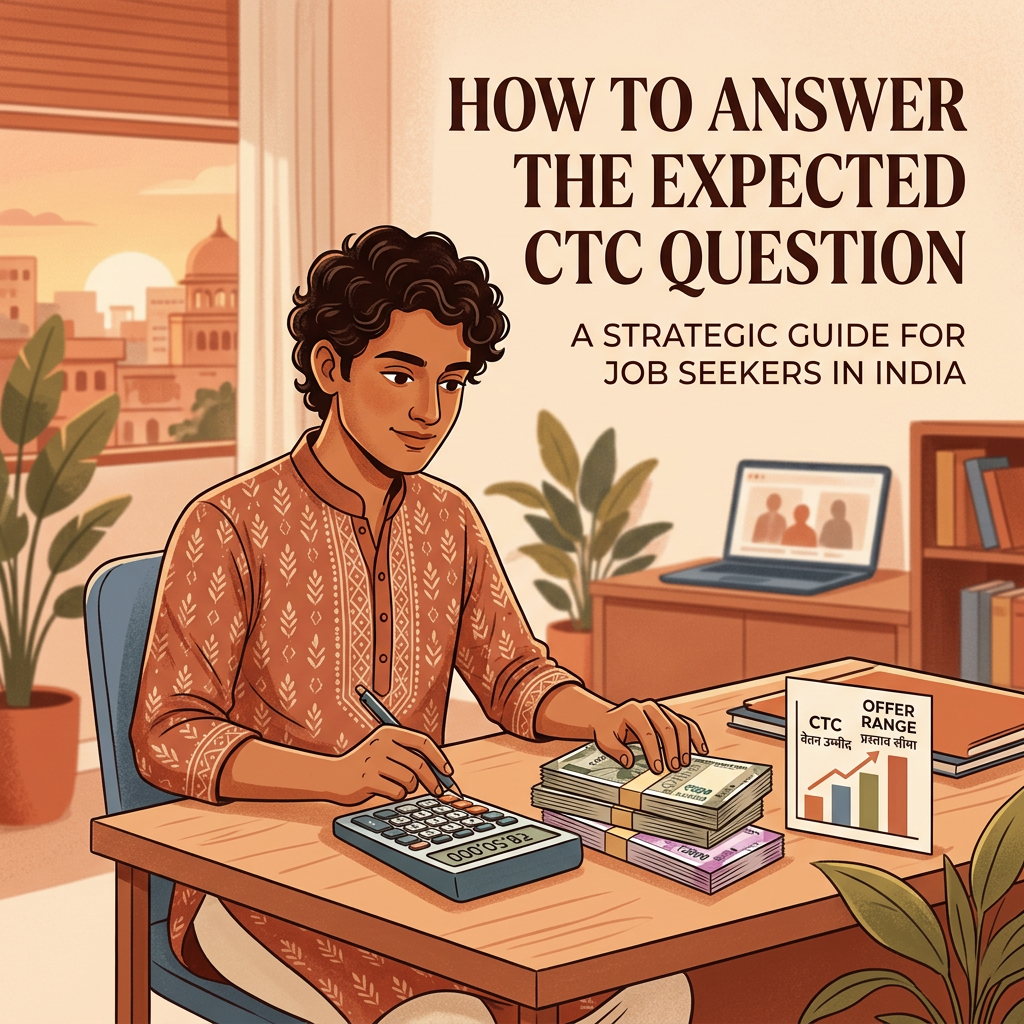
It usually arrives in the first ten minutes of the first HR call, before anyone has established what you can do. "So, what is your current CTC and expected CTC?" Most candidates answer immediately, honestly, and low. Those fifteen seconds cost more money than any other part of the process.
It's a filter and an anchor at the same time. The filter is obvious: if your expectation sits far above the band, the recruiter saves everyone a week. The anchor is the part that costs you, because the number you say becomes the ceiling the offer gets built down from, whatever the role was actually budgeted at.
Notice how rarely the recruiter volunteers the band first. Whoever names a number first gives up information, and in this conversation that's structurally you.
The standard Indian answer is a hike on your current CTC: "I'm at 12, I'm looking for a 30% hike, so around 15.6." It feels reasonable and it reliably underpays you, because it prices you against your last employer's budget instead of this one's.
When you move from an IT services firm to a product company, the two bands for the same skill can be far apart. We have seen candidates find product-company offers well above what their services salary would have suggested, though we have no published figure to point you at and you should check the range for your own role and city. If you anchor on your services salary, you hand that whole difference to the new employer.
Deflect once, politely, and ask for the band. It works more often than people expect, because the recruiter usually has one:
"I'd rather understand the role and the level first, because the scope makes a big difference to what's fair. Do you have a band budgeted for this position?"
If they give you a band, you've got the information and can respond to it instead of guessing against it. If the band works, say so and move on. Don't negotiate against yourself before there's an offer on the table.
Some recruiters are required to collect a number before they can schedule the next round. Once you've deflected and they ask again, give a researched range rather than a point, and attach it to the market instead of to your current salary:
"Based on what this role and level pays in Bengaluru for someone with six years in backend, I'm looking at 28 to 34 lakhs fixed. I'm flexible on the split between fixed and variable, and the scope of the role matters more to me than the top of that range."
Three things are doing work in that sentence. The range is anchored to the market and the city. The bottom of it is still a number you'd accept, which matters, because that's the one they'll hear. And you've signalled flexibility on structure without moving the number itself.
You're not obliged to volunteer your current salary, and it'll be verified from your payslips at the offer stage anyway, so don't inflate it. Inflating current CTC is one of the most common ways Indian candidates lose an offer at the background-check stage, and it's a miserable way to lose one.
State it accurately and in full: fixed, variable, and anything genuinely part of the package. Then move the conversation to what you're looking for next.
Most people know all of this already. They still answer badly, because the question arrives fast, in a call they're nervous about, and the honest low number is the easiest thing to say under pressure. Saying the sentence out loud once before the call, or even just typing it out, is usually enough to change which version comes out of your mouth on the day.
The mock interview covers the HR round specifically, this question and the notice-period one that usually follows it.
Score your resume against a real posting with the free ATS score checker, or rehearse the HR round against an AI interviewer that asks the follow-ups.
Get Started FreeSign-in cookies are essential and always on. Analytics and marketing cookies are not — they only run if you say yes. You can change your mind any time. See our Optional analytics & marketing cookies — your call. Privacy Policy.